Sunday, 5 June 2022

Review: The Boys In Blue

(An un-ironic warning: the following piece is part of a series of joke-reviews, but this one gets particularly dark. Readers of an even slightly squeamish disposition are advised to just not...)

The Boys In Blue
Cert: PG / 87 mins / Dir. Val Guest / Trailer

Fade from black. We open at dawn. Just. A warehouse in a quiet, anonymous British industrial estate is the site of the only activity we see as night begins to recede.

A dishevelled Luton van sits backed up to a loading bay while six burly men in tracksuits briskly fill it with long metal ammunition trunks from a wet floor. A seventh sits in the driver's seat, clearly anxious to leave but restraining his impatience.

Each case is around eighteen inches square by six feet long, with scattered holes the size of snooker balls roughly bored into the sides. The men work in teams of two, and the ease with which they handle each crate suggests this is for expediency rather than the weight of its contents. Nonetheless, they are not chipper in their work. No one speaks. The only sounds to be heard are grunts of exertion and the scraping of the trunks as the they are stacked five-high.

As the last crates are loaded and strapped into place, three of the men congregate outside the warehouse and begin jogging on the spot, getting into character for the decoy pastime they are about to assume. A fourth taps loudly three times on the side of the van. The ignition is started. The four men leave the yard, just an early morning group of fitness enthusiasts. The other two will catch up in no time at all.

Before the van doors are closed, locked and security-sealed, the last thing we see of the interior is one of the trunks closest to the back. Where blackness should be visible through one of the holes, a frantic, terrified and very human eye peers out, red-rimmed, darting around and trying to make sense of its situation.

The door slams. Cut to titles.


Famously unsatisfied with his critically acclaimed work on 1939's Ask A Policeman, writer/director Val Guest waited four decades to finally give his story of insular police corruption a makeover at the tail-end of the first age of cynicism. Taking stylistic nods from the likes of The WIcker Man, Straw Dogs and Taxi Driver, Guest's dark retooling of the British Bobby caper fed off the social unrest and mistrust of authority in Britain as Thatcher rose to power and go-getter capitalism began to properly bear its fangs.

Ed Welsh's pounding score lifts and thrills with its lightly orchestral adrenaline, while Jack Atcheler's cinematography routinely hauls the viewer between the brightly lit Dorset and Bedfordshire location shoots and the near-blackness of furtive night scenes. This is an uncompromising, if blatant, visual metaphor for the mood of our protagonists, a pair of small-town police officers catapulted through a succession of crimes which makes, and then breaks, them.


"Ooh, you really 'ate me, don't ya Tommeh?". Bobby's eyes burn with persecuted indignation as he glares at his partner, his superior and his best friend.

"No, I don't hate yer, I'm just sayin' this is all your fault!". Tommy plays the moment lightly, knowing that a mis-step at this crucial stage of their investigation could have larger ramifications than just a demotion.

"Didn't ah say that it were weird 'ow Mr Lloyd always 'as kidneys fer breakfast? That's weird that, an' ah said it!"

"Yes it's weird, but that on its own doesn't warrant an investigation! Anyway, you've been proved right. The number of staff he's goin' through from the recruitment agency bears that out, even if the missing persons register doesn't."

"So 'ow's this mah fault??". Bobby's voice reaches a crescendo of guilt.

"Because you let the ambulance in crew to take away the body of that girl who died in custody! And I hadn't phoned them!"

"Well I didn't know that!!" blusters Bobby, "...d'you think they're onto us?"

"After Mr Lloyd told them about your little scene in his freezer-room, yes ah do!!"

A knock sounds at the door. The pair visibly start, and after a silent pause which seems to last forever, Bobby crosses the room and gingerly opens it. Framed in the doorway stands the hulking form of the coastguard, his dour, weathered face uplit by the flaming lamp he carries. A smile breaks slowly across the coastguard's face. He has come to ask a favour...


Guest's bizarre master-stroke here is casting Tompkins Canniole Roberto & Ball, at the time three years into helming their own prime-time comedy and light entertainment show. After chatting to the duo backstage one evening in the mid 1970s on the Lancashire club-circuit, the director had learned that both were RADA-trained and had taken to comedy after feeling theatrically typecast in Shakespeare's bloodier tragedies. Happy to take the money that the laughs were bringing in the meanwhile, Cannon & Ball nevertheless yearned to return their hands to something with more heft.

Beginning as a twisted comedy to lull the viewer into a sense of false security, our heroes' tenure at a quiet rural village police station is thrown into turmoil when they uncover a people-trafficking operation feeding into the international modern slavery markets and black-market organ harvesting. That they make this discovery when arranging to illicitly shoot an adult movie at their police station (the "blue" of the film's title), only adds to the thematic confusion that the final product faced on release. Without straying into spoilers, what starts dark soon descends into absolute aesthetic and moral bleakness, and Guest's promo-trail defence of using the film to highlight very real contemporary issues to a mainstream audience feels risible given how much gusto he put into embracing the ethos of giallo-cinema.

Comedically fronting an exploitation conspiracy thriller with every reason to be paranoid, The Boys In Blue are nonetheless a brutal tour de force.


Fade from black.

In a dank, grotty, breathless room with no windows, Sergeant Cannon and Constable Ball lie handcuffed to two rickety old hospital beds, although as the single unbroken shot continues, we see that they are in no real position to move anyway. Lying naked, lesions and poorly-sewn scars cover both, their broken bodies abandoned here, the floor still wet with congealing blood. The camera roves slowly to Ball as he regains consciousness and begins to squirm.

"Tommeh! Tommeh? Are ya there? What's goin' on??". Fear and confusion fight for supremacy in his croaking voice.

"It's alright Bobbeh, ah'm 'ere. It's alright...". Cannon has been awake for some time, and has quietly assessed the situation.

"Ah can't see Tommeh! Ah can't open mah eyes!". Panic has entered and is winning the fight. Bobby's eyelids are sewn shut, but they do not roundly bulge as they should, his eyeballs having been removed for the corneas to benefit someone else. Tommy can just about make this out through his own one remaining eye. He also knows the sickly yellow tinge to both his and Bobby's skin is not due to the single glowing nightlight in the corner, but their kidneys having been removed for the same ends. The uncountable stinging wounds around his torso tell him he is now considerably lighter than he was, Bobby probably moreso. They're only lucky the gang haven't also removed their hearts.

Actually no, not lucky. Tommy knows that was intentional. They were supposed to re-awake here.

"You need to conserve your strength Bobbeh, help will be 'ere soon! Just rest, eh mate?"

"Tommeh? Tommeh! What's goin' on? Ah'm... Ah'm scared Tommeh!". His partner tries one last time to console him.

"It's alright Bobbeh, ah'm 'ere. Ah'll look after ya. 'Aven't I always?"

"Aye... aye, right enough. Rock on, Tommeh...". Fatigue overcomes Bobby as he slumps back against the filthy mattress. He is not unconscious, and his shallow breathing suggests he is far from relaxed. But with his friend's permission, he'll try and grab what sleep he can.

Tommy is still awake, though. He knows the gang won't be back. He know that this is the basement of the now-condemned police station, cordoned off as hazardous and due for demolition. But no one will be here for at least a month. All Cannon and Ball can do now is wait. But not for help. The last shot is of Tommy's lone eye as it darts around the room, and then directly, lingeringly into camera.

Cut to credits.



And if I HAD to put a number on it…
(Yes, the review above is wishful sarcasm. The film itself is more than a bit crap, albeit in interesting ways)


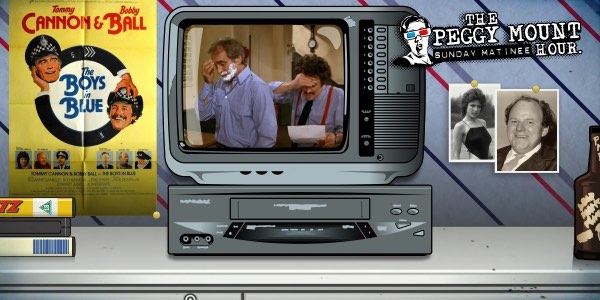
...and if you want to listen to some words about this film which take it far less seriously, are far more sweary and have All The Drink involved, here's a podcast version you might be interested in:


DISCLAIMERS:
• ^^^ That's dry, British humour, and most likely sarcasm or facetiousness.
• Yen's blog contains harsh language and even harsher notions of propriety. Reader discretion is advised.
• This is a personal blog. The views and opinions expressed here represent my own thoughts (at the time of writing) and not those of the people, institutions or organisations that I may or may not be related with unless stated explicitly.

Sunday, 29 May 2022

Review: Condorman


Condorman
Cert: U / 86 mins / Dir. Charles Jarrott / Trailer

Standing astride a cross-beam on one of the world's most prominent landmarks, Woodridge Wilkins fumbles for the activator button on his suit. Photographers wait below, disbelievingly eager for this new breed of hero to prove himself. Distant, mumbled shouts of... encouragement?... crowd his head and threaten to derail the absolute concentration needed. No. Shut them out. Silence. The time is now. Time to prove to the world that The Condor Man is indeed its saviour. That mistakes may have been made, but all in the name of progress. Of success. Of freedom.

Daring to look down for a fraction of a second, the concourse is full of gawping tourists not yet realising the importance of this moment in their lives. Activity is frantic, but Wilkins cannot discern it clearly because of the cumbersome nature of this iteration of his flight suit. He is certain it will fly this time, though. It has to fly. If Woody can't convince them of The Condor Man's significance, then his friend Harry will, he knows it. Good old Harry.

Everything which has happened has led to this point. Woody firmly thumbs the activator and leaps forward, wings unfolding into the arms of destiny.

The story begins...

One rather suspects that when Disney commissioned screenwriter Marc Stirdivant to adapt Robert Sheckley's The Game of X into a feature film, they'd expected the end-product to tap into the post-Superman zeitgeist and the ongoing Bond/Palmer/U.N.C.L.E. ethos simultaneously, giving a family-friendly entry point into action cinema. By the time director Charles Jarrot had joined the team, what they received instead was indeed this, but also one of the most brutally efficient examples of high-concept physical and psychological revenge-horror (and at several points, actual snuff-movie) of its era.

That the film owes no small amount to the likes of Scorcese's The King Of Comedy is a given (in development at the same time, writer Paul D Zimmerman was a close friend of Stirdivant) but it goes much further, surpassing subtext and suggestion, straying into territory only previously covered by Tobe Hooper's Texas Chainsaw Massacre seven years earlier. An unlikely yet perfect casting choice, Michael Crawford channels pride, anger and ultimately fear into his performance as proto-incel Woody Wilkins, a socially introverted comic writer who escapes into his own fantasy as reality repeatedly stifles his dreams and crushes opportunities at every turn. Condorman is a blunt parable, showing us what happens when those two worlds collide. It presents its hero without judgement, but also without apology.

Damn Harry. Where was he? The man was supposed to be Woody's friend - his best friend - and now look what he'd gotten him into. A simple desk clerk at the CIA probably shouldn't have access to the information which Harry kept unearthing, but Wilkins was glad that he did. Or he had been glad at any rate. No one had been more surprised than Woody when a favour in delivering a package to a locally-based undercover cop had resulted in one of the city's largest drug busts. Woody's part in this had been hushed up of course, he was an undercover agent himself now.

And how. The hoodlum's neck hung limply in Woody's hands, snapped like a crusty baguette as his heart pumped out the last of its blood through a serrated hole in his sternum. That stain wasn't going to come out in a hurry. Four more similarly attired henchmen lay around the outside of the farmhouse. Convincing disguises - indeed, Morovich had even gone so far as recruiting a pair of old women for this gang - but the heavy villager's peasant clothes had impeded their ability to fight and The Condor Man had succeeded in this strand of his mission. "Send more, I'll kill more" he muttered. To himself.

Backup should have arrived by now, and it was a point of growing concern that there was no sign of the special ops team which Harry had assured him would be there to ease escape from a tight situation. Then again, Woody suspected that Natalia was playing her 'double agent' card a little too wildly, hedging her bets as to which side of the iron curtain to finally fall. If the 'former' spy had interfered in Harry's plans, that would put everyone in danger. This wasn't an insurmountable problem though, Woody could kill her easily enough if needs be...

Set within the extended flashback of The Condor Man's flight into the Paris skyline, Jarrott's film darts around a kaleidoscopic vision of Woody's domestic life - constantly demeaned and put-upon by an ageing but acerbic mother whom we hear but never see, causing us to wonder if she's just another figment of his imagination - and an unfolding backstory of the protagonist coming to believe he's a deep cover black-ops agent for the CIA. The reality that we're watching a man suffer a chemically-exacerbated breakdown and subsequent murder-spree is not fully clear until we see 'Harry' pleading that he barely even knows Wilkins for a third time in police custody.

But rather than use this darkly farcical setup as a prop for any sort of biting commentary (the film predates James Gunn's Super and Bobcat Goldthwait's God Bless America, both structurally and thematically similar, by almost three decades), Jarrott chooses to bring his creative vision closer to that of outright exploitation cinema, a genre which was in its death throes by the early 1980s. This was a definitively bold artistic choice at the time, and one which has ensured his film has only barely survived in terms of its notoriety alone. The fact that three stunt performers died during the intense fight-scenes ensured that there was a four year delay in Condorman coming to VHS. The fact that those scenes were somehow left in the edit ensured that it was instantly banned for another ten. Much like De Palma's Scarface, there are few characters to actually like here - even the most vulnerable are shown to be riven with moral weakness - and the key to salvaging any aesthetic satisfaction from this really lies in enjoying the majesty of a terrible thing done well.

Morovich dead. His goons dead. That lying, brazen, teasing, lying temptress... dead? Almost certainly, she couldn't have survived the blood loss. Good. And where were his thanks? Where were the parades and laudatory press columns and interview requests and Congressional Medals and just general fucking gratitude for all that he - that The Condor Man - had done? For the sacrifices he'd made in the name of freedom? Nowhere to be seen. He'd been sold out by those he'd sworn to protect. Well, so be it. It should hardly come as a surprise, yet the disappointment was no less tangible. It had been worth it, though. Those others, they needed to be stopped. Perhaps one last show of prowess was required. Perhaps the people need a super-hero, not a spy. Well okay, one last punt then.

Back midway up the Eiffel Tower we cut to a wide shot as Wilkins fumbles with his suit-activator button. We now see the reason he has been having trouble with it. 'Harry' - a man who works at the methadone clinic where Woody has been a service-user - is gagged and bound, his limbs crudely amputated, in a device which appears to be half-sack/half-harness on Woody's front. Screaming and wide-eyed, the counter assistant's constant terrified squirming has been threatening to pull Woody out of his reverie and off the steel beam. But even now that The Condor is ready to take flight, everyone knows the glider-suit cannot possibly take the weight and imbalance of two men, let alone one. Only death awaits; glory is an illusion just out of Woody's grasp. But ever the optimist, he has to try. The mechanism engages with a satisfying *clunk*.

The Condor Man takes flight.

Cut to black.


And if I HAD to put a number on it…
(Yes, the vast majority of the above is a sort of sarcasm, but Condorman is surprisingly good nonetheless.)


...and if you want to listen to some words about this film which take it far less seriously, are far more sweary and have All The Drink involved, here's a podcast version you might be interested in:


DISCLAIMERS:
• ^^^ That's dry, British humour, and most likely sarcasm or facetiousness.
• Yen's blog contains harsh language and even harsher notions of propriety. Reader discretion is advised.
• This is a personal blog. The views and opinions expressed here represent my own thoughts (at the time of writing) and not those of the people, institutions or organisations that I may or may not be related with unless stated explicitly.

Sunday, 22 May 2022

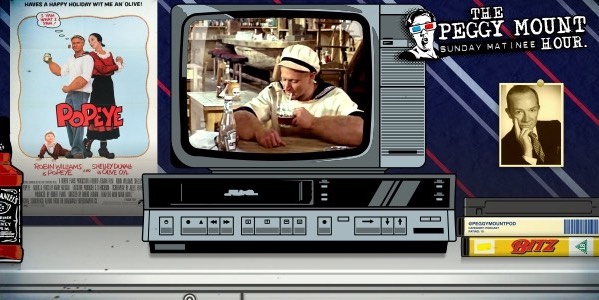
Review: Popeye


Popeye
Cert: U / 113 mins*1 / Dir. Robert Altman / Trailer

Roiling clouds conspire to occlude an azure sky, the first and last ray of hope we'll see until the house lights rise at the end of our story. Dread gathers as we skim slowly across a darkening sea, its leaden surface undulating softly under the gathering storm. A lone figure is spotted heaving against the waves in a wooden rowing boat. How he got here, we will never learn.

A low, tinny bell sounds from a wooden church silhouetted on a clifftop as the mariner is about to reach land. It is revealed that everything we have seen so far has been from this out-cropping, and we are the inhabitants of Sweethaven, a decaying fishing port worn to the bone by harsh years on the rocky coastline. We are trapped here. We belong here. We are complicit in all that is about to happen. As the sun rises wanly, villagers begin their day shambling through the near-ruins they call home with a moaning chorus almost Gregorian in its nature; stripped of deific adoration, with existential fear in its place.

Lashing the craft to a crumbling jetty, the helmsman of the rowing boat hoists himself painfully onto the boardwalk, shedding a stained, black coverall to reveal his form to the suspicious, peering crowd as it gathers. Hunched, limping and hideously deformed in a tattered mockery of naval attire, the sailor squints through his single eye at the peasants come to inspect this intrusion into their existence. Although nothing is said, one question is the only clear thing in the fetid air: has he been expected..?

This arresting scene opens Robert Altman's cinematic interpretation of Popeye, and the director is certainly best placed to handle this questing exploration of netherworld vengeance and mythological symbolism after he effortlessly entwined the horrors of warfare on and insanity with 1970's M*A*S*H (later retooled as a televisual comedy series, to poorer effect).

E.C.Segar's character of Popeye debuted in printed-form in 1929 of course, only a year after the publication of H.P. Lovecraft's The Call Of Cthulhu. Perhaps the only surprising thing about the link between Lovecraft and Segar's eldritch dyad is that it would take half a century to combine them on film.

The muttering sailor hates this village, and he is certain the feeling is mutual. The freakish townsfolk seem hell bent on their conflicting aims of refusing to let him integrate and refusing to let him leave. That they are under a spell of fear cast by their unseen patriarch is obvious, but there is something else that he cannot yet put his finger on. The fact that his time here has felt hazy, governed by dream-logic, is not helping. He remembers nothing of his life before Sweethaven. Popeye has already beaten a handful of yobs to a pulp in the tavern, only to find them there the next day as if the fracas had never occurred. Time collapses here.

Perhaps the woman is the key to all this. Shrill, vindictive and more highly strung than even the rest of the villagers - and equally as cursed with the batrachian features of the Deep Ones - Olive is nonetheless different. Popeye doubts she knows why this is, but even if she cannot provide the answers he seeks, she can probably lead him to them...

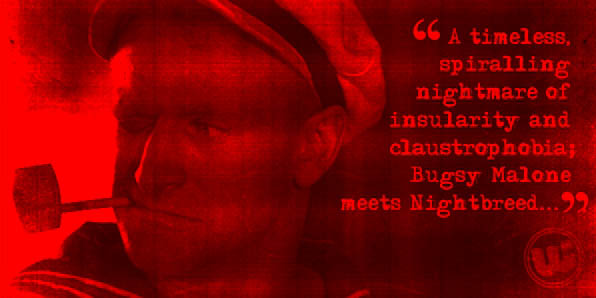
Altman's direction has aged like a fine wine as his cast shamble about the set hollow-eyed, brimming with unearthly menace. Happy to go for unsettling rather than outright terrifying, watching this in the comparative light of the 21st century assures an audience that his work here often achieves both ambient aims simultaneously. The story's timeless but resolutely vintage setting combines insularity and claustrophobia, like Bugsy Malone meets Nightbreed.

As Popeye becomes embroiled with the denizens of Sweethaven - a copyright-evading cypher for Innsmouth if ever there was one - his spiralling lack of focus becomes our own. The quest for victory becomes all even as the protagonist loses all sight of what the victory will look like. Lost in Popeye's own nightmare, Altman's work truly is the artistic culmination of Greek tragedy, Kubrickian nihilism and visceral Cronenbergian terror.

Having bested the locals, their pathetic prize fighter 'Ox Heart' and even the Commodore's personal attack-dog Bluto, the sailor finally stands in simmering silence, eye-to-eye with the reclusive puppet master himself. The broken, grizzled, mocking and resourcefully spiteful figure he sees does not surprise him. Popeye beholds a vision of himself, of what he could be if he chooses this destiny. Stripped of weakness, of doubt, of cumbersome humanity. Drowning in fire; Dagon incarnate. And then he realises there is no choice.

The gruelling journey so far - every swing, punch, duck and jab - has not been a test to destroy the mariner, but to prove his worth. He was not sent here to save Sweethaven, but to rule it. The Commodore is the sailor's father, just as The Sweet Pea is his son. They always were; they always will be. The circle is complete. Again. Popeye is home and the madness from the sea reclaims the land.

Hail to the king, baby...


And if I HAD to put a number on it…
(Yes, everything up there? That's a sort of sarcasm. While there is some dark potential here, Popeye is unequivocally crap.)


...and if you want to listen to some words about this film which are swearier and with The Drink involved, here's a podcast version you might be interested in:


*1 The regular, BBFC-rated version of this film is 92 minutes. There are two separate versions uploaded to YouTube which bear out this timing, and yet for the Peggy Mount Calamity Hour podcast (the precise and only reason this abomination was watched), we managed to endure the Blu-ray anniversary cut, which was somehow twenty minutes longer. For the love of god...[ BACK ]

DISCLAIMERS:
• ^^^ That's dry, British humour, and most likely sarcasm or facetiousness.
• Yen's blog contains harsh language and even harsher notions of propriety. Reader discretion is advised.
• This is a personal blog. The views and opinions expressed here represent my own thoughts (at the time of writing) and not those of the people, institutions or organisations that I may or may not be related with unless stated explicitly.
Sunday, 15 May 2022

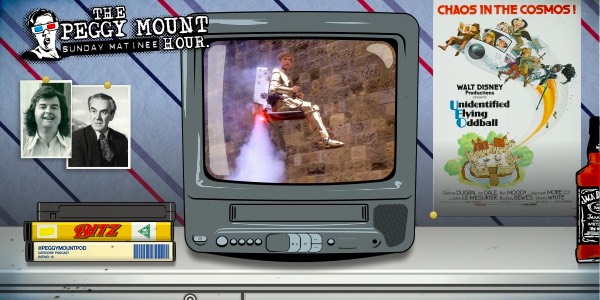
Review: The Spaceman and King Arthur


The Spaceman and King Arthur
Cert: U / 93 mins / Dir. Russ Mayberry / Trailer

So many stars. Incredible. Since his earliest memories began, Tommy had always been fascinated by those myriad points of light. At first they were magical, a way to hold his fear of the dark at bay. Then came reason, school and the sciences, and he learned that they were gigantic balls of gas burning away in the galaxy, just like our own sun. By the time Tommy graduated astrophysics at Harvard, they were magical again. No amount of explanation or analysis could dull their power. Quite the opposite.

And he'd never in his life seen this many before. The constellations were familiar and all in place, but there were just... more, somehow. Stars where spaces should be as the familiar ones shone more brightly than ever. When Tommy had started work at NASA this had been his dream of course, but as a calibration technician it had seemed unlikely he'd ever get any closer to the stars than prepping the topmost levels of the launch towers.

But if his mom could see him now. Actually, it would have been faintly reassuring if he'd thought that anyone could see him now. He'd always been happy in his own company, and god knows that's a boon for any astronaut, but nothing could have prepared him for... this. Because there was now precisely no idea of how long this mission was going to take - relative-time or actual - and the experimental shuttle Stardust hadn't been build with claustrophobes in mind. The ceilings were low, the cockpit was tight and the windows were small. But so many stars.

Tommy wasn't looking out of the window. He was lying on top of the shuttle, helmet off, hands behind his head and staring up at the clearest sky he'd ever seen. Zero light-pollution, he imagined. Next to no chemical-pollution, too. If the readouts on the console were correct (and he'd drank enough beer with three of the guys who worked on the tech to know that was certainly questionable), the light-drive had worked and he'd travelled back in time. Precisely how far back remained to be seen, but the lack of light-pollution (after Tommy had put out the fires from his crash landing) would suggest 'significantly'.

The technician-turned-astronaut-turned-technician-again could begin the rest of his repairs at daybreak. For now, he could at least enjoy the view. Because every wondrous point of light was a welcome distraction from the one question which wouldn't go to sleep: how the fuck was Tommy Trimble going to get back home?


Released in 1979 under Disney's Buena Vista label for more adult-fare, The Spaceman And King Arthur is a textbook example of the frenzied genre-mashing that occurred as Hollywood transitioned its modus operandi from Historical Fantasy Farce (Robin Hood, The Sword In The Stone, Zorro - all high on action and cheap to produce) to the science-fiction craved by audiences in the era of the moon landings, Star Trek and Kubrick's 2001.

Pressure was on the studios to maximise profit margins with the imagination of the latter for the price of the former. Together, director Russ Mayberry and writer Don Tait quickly found that the best way to achieve this was literally combining the two. And so a re-tooling of Mark Twain's 1889 novel A Connecticut Yankee in King Arthur's Court was brought into being, albeit with one more key thematic ingredient which was kept out of the marketing.

This was, in fact, closer to Weird Tales alumni Robert Bloch's own twisted take on the story from 1934, Dead On Time, which received praise in the pages of that pulp journal but ruffled few feathers elsewhere. Nevertheless, Mayberry had Disney's studio staff scour second-hand bookshops and public libraries to buy, barter and often steal as many remaining copies as possible, so that the reveal occurring precisely half way through the film's 93-minute runtime would come as a surprise to audiences...


The language barrier was maddening. At times it was close to non-existent and at others - now, specifically - it was like being in a different country. Then Tommy remembered, he was in a different country. But they'd invented English for crying out loud, why did some of them have so much trouble speaking it?

"And trulie thy hae no kinge in thy lande?" Gawain looked genuinely uncomprehending, like a dog cornered with a geometry problem.

"That's right, no king. I thought we'd been through this? We've got a president, okay? Although I assure you it doesn't always feel like a better solution..."

"But how dost thy peoples pertain to lawes? Who ist to keepe charge in ye--"

"Look, it's a long story okay? Not always pleasant, but nowhere near as messy as France!"

"Sire, didst thou-- Ist thon visitor from France? A spy perchance?"

King Arhur waved his deputy down. "Fear not, Sir Gawain, there will be time for this later." He turned to Tommy. "In the meantime traveller, perhaps you would be so kind as to furnish us with an explanation of how exactly you appeared in my kingdom, on the day after the firestorm, approaching my castle unbidden in such strange tunic and bearing the severed head... of a dead-ite?"

Tommy sighed, hung his head and looked up under his brow. "Well, I was kinda hoping you could fill me in on that last part, yourself." He eyed the sack at Gawain's feet, and the seepage still oozing from it. "Looks like you need a pest-controller, and your magic-man in the dress over there doesn't seem to want to get his hands dirty. Now are you going to let me help, or are you going to let me go?"

Merlin and Gawain bristled, although King Arthur was more sanguine having already seen to the heart of the problem. Alisande stifled a smile; this stranger's insolence was breathtaking. Tommy, however, was rapidly running out of patience, not least because he knew there were hundreds more of those things shuffling their way toward the castle. And they didn't care about monarchical hierarchy either...


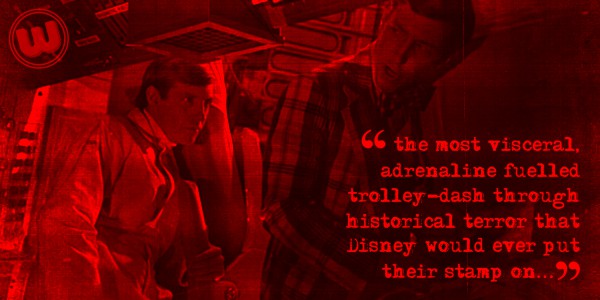
And surprise, it did. The opening week saw hundreds of thousands of parents take their young charges to the cinema for a wholesome romp through Arthurian legend in the company of a beloved cast of British Comedy Royalty. So when the Army Of The Dead broke their way into Camelot, beheading, disembowelling and just eating anything in their path, queues quickly formed at the box office again - this time for refunds. But the damage had been done. This next generation of filmgoers had witnessed the most visceral, adrenaline fuelled trolley-dash through historical terror that Disney would ever put their stamp on...

Recalled and banned by the MPAA and the BBFC alike, it would be another twenty years before The Spaceman And King Arthur saw a domestic release; and even this was as a region-free unofficial transfer of a recovered print on an independent Italian DVD label. By this time critical culture had hardened itself to horror-crossover fare, and Disney responded by releasing a sanitised cut of the film, claiming this had always been the director's intention.

A 2003 interview in the Radio Times with supporting actor Rodney Bewes belied this however, as he recalled "We had the best fucking time on that set! Getting paid for sliding around in pigs' innards every day, lashing it at the banquet table every night, and knowing there was no way it'd get too far out of the gate to damage our careers? I don't give a shit about Merlin, that's real magic..."


The figure limped down the stone-walled corridor, its rasps of effort fizzing in the air like a hundred bats' wings. The eyes seemed to glow as its stare fixed Tommy, although he knew this was an illusion created by the flaming sconces which lit the wall between strategic arrowslits. The remains of its jaw grated and sprayed rotting flesh, as the creature hissed air it no longer needed to breathe. Dear god, it was trying to speak...

"Trri-i-i-innn... Tri-i-innnd..." It lifted an accusing finger at the spaceman as its broadsword trailed from the other hand.

"This is what you wanted Mordred, you dumb shit!" Tommy crowed, with a swagger he didn't feel. He just knew that even now, the best way to defeat this darkest of knights was to use its own anger against it. "This is your prize! You command the Army of the Dead now! But did you seriously think they were going to let you do that while you were still alive??" Tommy almost felt sorry for Mordred. The transformation process had taken six days, and reports had come in of his screams for all of those. Merlin was the army's necromancer - in some ways its creator - but he didn't control them. Mordred, on the other hand, had been hamstrung by his own ambition. Again. Well, if he was too stupid to learn a lesson, that was hardly Tommy's fault. The least this boy could do was help out everybody by trying to teach him again.

Suddenly a sharp inhalation - again unnecessary, the last vestiges of human reflex echoing through Mordred's reanimated remains - as the former-knight and perennial-asshole snapped into a ninety degree fighting stance, sword raised in front of him in a two-handed grip. This sudden jerk had opened the rotting gash in Mordred's stomach - a wound from the last time they fought which would now never heal - and a clump of shrivelled innards flopped its way noisily onto the flagstones with a comet's trail of maggots in its wake. Mordred didn't even notice.

Shit. Merlin was controlling him now. With the wizard's guile, the warrior's reflexes and no capacity to feel pain, this was going to be trickier than before. Hand-to-hand combat was out of the question. Tommy reached around to the rear of the harness made for him by Alisande's father the saddler, retrieved his newly tar-powered flame thrower, and flipped the ignition.

Barbecue twice in one week?

Fuck it, Tommy was on holiday after all...


And if I HAD to put a number on it…
(Yes, the review above is mostly sarcasm. The actual film is staggeringly unfocused.)


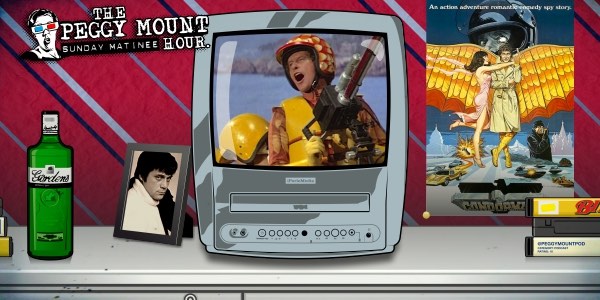
...and if you want to listen to some words about this film which take it far less seriously, are far more sweary and have All The Drink involved, here's a podcast version you might be interested in:


DISCLAIMERS:
• ^^^ That's dry, British humour, and most likely sarcasm or facetiousness.
• Yen's blog contains harsh language and even harsher notions of propriety. Reader discretion is advised.
• This is a personal blog. The views and opinions expressed here represent my own thoughts (at the time of writing) and not those of the people, institutions or organisations that I may or may not be related with unless stated explicitly.