Sully Cert: 12A / 96 mins / Dir. Clint Eastwood / Trailer
The new Clint Eastwood directed movie, Sully - the story behind airline pilot Chesley Sullenberger and the famous forced water-landing in 2009 whereby he successfully prevented any fatalities - is currently sitting at an 85% critics' approval rating over at Rotten Tomatoes, with the audience response slightly higher at 87%. I only mention this because if you want to read something reassuringly positive and uplifting about the film, that's where you'll find it…
Fresh from failing to adequately depict or explore PTSD, Uncle Clint manages to take another remarkable story which would have made a fantastic documentary, and instead fashion a mawkish, simplistic and completely patronising TV melodrama. Naturally, in addition to several depictions of the forced landing in question, the film also features two exquisitely CGI'd sequences of a passenger jet crashing into the New York skyline in a ball of flames and seared flesh, just to show that our heroic captain is having 'episodes' after the incident and absolutely not at all to be exploitative and dramatic about an event where everyone actually survived. Dear me no, no. Dear me, no.
Todd Komarnicki's screenplay*1 clunks from one scene to the next, with characters either narrating exactly what's happening on-screen or just verbally spouting their inner monologues full of clichéd platitudes to fill the gaps. Overall, it's Aaron Eckhart who manages to escape with the most dignity, starring as Sully's co-pilot with the fewest lines in the script. And don't let the reviews kid you, Tom Hanks' performance in this film is in no way special or extraordinary; he just plays Tom Hanks With White Hair, metaphorically phoning in his performance (unlike Laura Linney as his wife, who literally phones in hers). Meanwhile, the dastardly crash-investigation team smirk and twiddle their moustaches for two and a half acts before Mr Eastwood stops one beat short of sending a silver-service butler into the courtroom to announce "And now ladies and gentlemen, some humble-pie of truly epic proportions is about to be served!". All that remains is a closing-credits sequence whereby the actual real Mr Sullenberger is reunited with his actual real passengers in an aircraft hanger for forced jollity all round. Like the film hasn't already shown the guy going through enough without having to appear as himself in a bad version of his own worst day.
I'm very much aware that due to its content and tone, Sully is a sort of cinematic sacred-cow. I don't care, this is a terrible movie and it needs to be called out. The film doesn't celebrate Chesley Sullenberger, it patronises him to within an inch of his life, and Clint Eastwood couldn't direct traffic on a one-way street.
Biting the inside of your own cheek to avoid shouting at the screen for an hour and a half.
Yeah, the four (four) flight simulations we're treated to at the film's climactic courtroom scene work so much better on the big screen.
According to the folks over at RT, yes.
Obviously, I beg to differ.
It's not even Eastwood's best as a director, and that's saying something.
Y'know what? I might, a little bit…
There isn't.
Level 2: This film stars Sam Huntingdon, who was also in Fanboys alongside Carrie Fisher, Billy Dee Williams, Ray Park and a metric shit-ton of Star Wars references.
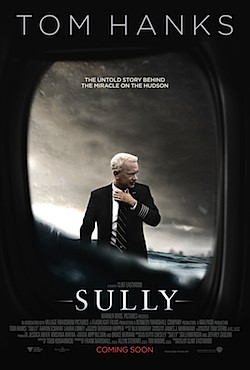
*1 The poster cites this as "The untold story behind the miracle on the Hudson". Untold story. It's based on Sullenberger's own book. That's where we are before we've even sat down in the auditorium...
DISCLAIMERS:
• ^^^ That's dry, British humour, and most likely sarcasm or facetiousness.
• Yen's blog contains harsh language and even harsher notions of propriety. Reader discretion is advised.
• This is a personal blog. The views and opinions expressed here represent my own thoughts (at the time of writing) and not those of the people, institutions or organisations that I may or may not be related with unless stated explicitly.
Ah, a 'late-morning' screening. While the attending crowd was slightly more varied than the ones for Under The Skin and Knock Knock, there was still a strong contingent of Unaccompanied Middle Aged Man™ present. And during the lengthy, slow-motion opening sequence of Nocturnal Animals, I could sense many brows furrowing around the room and mouths falling agape, silently forming the look of "hang on, this is not the film that the trailer sold me…". There is a context for what happens at the beginning, but only in that the context is itself out of context. I won't spoil it, you'll see for yourself when you watch the film.
Confused? Welcome to Nocturnal Animals.
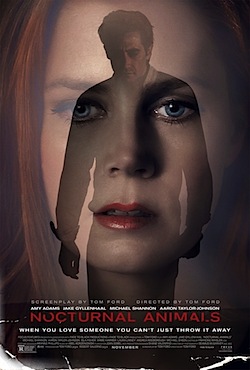
Tom Ford's adaptation of Austin Wright's novel, Tony and Susan, follows Amy Adams (Susan no less), as a fundamentally unhappy contemporary artist who receives a pre-publication manuscript from her ex-husband, Edward, after several years of non-contact. When it turns out that Edward's book is a violently clear allegory for his feelings about their failed marriage, Susan is appalled and enthralled in equal measure. The film splits into a visual adaptation of the work, Susan's reactions to it and a series of progressive flashbacks which reveal the ways their relationship broke down.
Nowhere near as challenging as it'd like to think it is, Nocturnal Animals is, nonetheless, very good at being difficult to like. Probably a little too good, actually. It's well acted and solidly directed, but I couldn't work out if the film has a terrible, clunky script, or a brilliant script of terrible, clunky characters. Maybe they're the same thing, even though they shouldn't be.
With Adams' as the emotionally reinforced artist, Armie Hammer as her second (and externally lecherous) husband, Jake Gyllenhaal as her flawed husband in the flashbacks and the flawed central character in Susan's interpretation of the book, and obstructive or negative supporting characters in all three timelines, I don't think it's unfair to say that there's not a single redeeming character in the whole film. That's not to say if has no redeeming features, but they're scattered loosely down a long, dark road.
The novel Susan receives depicts a man (Tony, from the title or the original book, above) driving through the southern states of America with his wife and daughter when they become ambushed by a gang of rednecks. One thing leads to another and the man is separated from his family while they're raped and murdered. The rest of the story follows Tony as he teams up with a borderline corrupt cop to bring the gang to violent justice. It's basically a 1970s exploitation flick with a framing device.
The bottom line is, for all the stark visuals, subtext and narrative layering, Nocturnal Animals slowly descends to a sort of art-student torture-porn, raising one eyebrow as it plays ironically in a sandpit it thinks it's too good for, all the while throwing in flashbacks and real-world segments which make decreasing amounts of sense*1. True to its title, the film embraces that sense of heightened-yet-detached unreality which is both the confidant and tormentor of the 3am insomniac. But that's no consolation.
With plenty of frowning and yelling but little genuine emotion on display, Tom Ford's film is a compelling artifice of drama. Which might actually be the point, admittedly…
It'll be more atmospheric on a big screen than a small one, yes.
Oh, I have no idea.
No.
No, but I will ask you to explain yourself in great detail.
There isn't.
Level 2: Nocturnal Animals features Isla Fisher, who starred in 2010's Burke and Hare alongside Simon 'Plutt' Pegg, Andy 'Snoke' Serkis, Tim 'Palpatine' Curry and Christopher 'Dooku' Lee...
*1 Okay, this section is in highlight-to-read spoilers for people who've seen the film and hopefully understood it more than I have:
1) The scene with Susan's colleague and the mobile phone which shows a monitor-video of a baby in a crib before a screaming demon leaps into frame, causing Susan to scream herself and drop the phone: I was under the impression that it was one of those prank videos that occasionally does the rounds. Except that her colleague's reaction displays no recognition at all, never mind amusement, once the punchline has been delivered. Okay, her phone screen is now smashed, but you'd at least get a "well, that joke backfired" line in response. So the other alternative is that the video is a nightvision baby-monitor app, as described, and Susan is in such a bad place psychologically that she's hallucinated the demon's appearance causing her to drop the phone. Except that we get no further hallucinations of this nature to suggest a descent into madness. So what gives with that scene?
Oh, and 2, who's the late-teen girl that Susan phones on the Sunday morning, who calls her 'mom'? The story leads us to assume that she doesn't have any children, indeed the 'bad thing' Susan did was aborting Edward's child (the vengeful reason for the couple's daughter's death in the book) at the start of her relationship with Hutton. But in one scene, Susan tells her assistant that her ex-husband is from 'a couple of years ago', which would be nowhere near enough time for Susan and Hutton to have a daughter of this age (and would also explain why neither Adams or Gyllenhaal look that much younger in the flashbacks - certainly not twenty years younger). And apart from anything else, Hutton's presented as such a prize tool that there's no way their relationship could have limped along for eighteen years, child or otherwise. Was Susan impacted so much by the discovery of the bodies in the book that she hallucinated her own aborted daughter back to life? I only ask because the poor girl isn't mentioned before or after that. Bizarre.
DISCLAIMERS:
• ^^^ That's dry, British humour, and most likely sarcasm or facetiousness.
• Yen's blog contains harsh language and even harsher notions of propriety. Reader discretion is advised.
• This is a personal blog. The views and opinions expressed here represent my own thoughts (at the time of writing) and not those of the people, institutions or organisations that I may or may not be related with unless stated explicitly.
Has it really been 18 months since the last one of these? It's ironic that a movie so largely forgettable seems more recent than that. No matter, Mr Bay's back in town with everyone's favourite adolescent amniotes; whooping, shrieking and high-fiving their way through the night-time streets of New York like the X-Men wired on Sunny D.
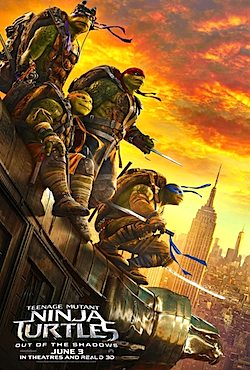
The thematic groundwork for this sequel was laid back in 2014, so the enforced coolness of Raphael, Michelangelo, Leonardo and Donatello should be about as surprising as Megan Fox in a Britney-esque schoolgirl outfit (for plot reasons, honest) or Will Arnett autopiloting his way through the screenplay. But I've got to admit that this movie's a lot more comfortable in its own skin than its predecessor. For all the hyperkinetic camerawork and Saturday-morning-cartoon plot about interdimensional lego-building, the film's saving grace is that it's not trying to play the manchild-nostalgia card this time: TMNTOOTS*1 is unashamedly a kids' film. Not a particularly great kids' film, but it at least forgives the movie its worst excesses and scattershot humour.
The film channels many influences once again, and feels for all the world like Christopher Nolan's Batman by the way of 1993's Super Mario Brothers. If it'd just slowed the hell down I'd probably have engaged with things a lot more, but that's like asking the Terminator not to shoot people.
And I almost can't believe I'm writing this, but the Turtles have far more in the way of individual personalities and development this time around, and it makes their scenes together pretty enjoyable. That said, everything else that's going on is a bit like watching a toddler playing with action figures: you're vaguely aware of the general story being acted out, but any narrative detail or nuance exists solely in the mind of the one wielding the toys...
All in all: perfectly acceptable, all things considered. I can't get annoyed with it*2 as I have with the week's other big release, because at least it's fun. Headache-inducing fun, but largely good-natured, nonetheless.
Oh, and did anyone else notice that when Will Arnett's Vernon steals the security camera from the lab, the timestamp on the in-cam footage says 18:04, yet it's broad daylight outside when Donatello mentioned earlier in the film that it's set around Hallow'een, so it'd be dark by then?
Oh, just me then…
The first one, pretty much.
Only if you're a fan already.
Pretty much, but it doesn't aim particularly high.
Not particularly.
Not at all.
There isn't, but there is a boot-shot.
Level 2: There's a veritable shit-ton of behind the scenes folks who've worked on various Star Wars projects involved in TMNT, but let's stick with the screen-friendly choice of Mr Will Arnett, who provided the voice of Batman in The Lego Movie, which also featured the vocal talents of Liam 'Qui-Gonn' Neeson, Anthony 'C-3PO' Daniels and Billy Dee 'Lando' Williams.
*1 Which is what all the cool kids are calling it.
*2 Mind you, the script uses "ninjas" as the plural of ninja. Yeah, let's just give up now with that one.
DISCLAIMERS:
• ^^^ That's dry, British humour, and most likely sarcasm or facetiousness.
• Yen's blog contains harsh language and even harsher notions of propriety. Reader discretion is advised.
• This is a personal blog. The views and opinions expressed here represent my own thoughts (at the time of writing) and not those of the people, institutions or organisations that I may or may not be related with unless stated explicitly.
It's certainly a brave gambit, source-novel or otherwise, to introduce a new Sherlock Holmes to 2015's audience. They're already fairly familiar with Baker Street's finest these days, or at least with their preferred iteration, and Bill Condon's philosphical drama brings us an odd quandary of a character; the classic Holmes of old, but in a more recent setting, and not himself at all.
Mr Holmes sees a 93yr old Sherlock, retired to the post-war Sussex coast to look after his apiary with his widowed housekeeper Mrs Munro and her young son Roger. The only thing spoiling his well-earned contentment is an overbearing sense of guilt and a rapidly failing memory. Eager to help the great detective and learn more about his final, troublesome case, Roger begins assisting Holmes in writing his final memoir, prodding and cajoling the old man's faculties into action, as three intertwined tales unfold for the audience…
I'll be honest, I found it hard work. There, I said it. There's much to appreciate about Mr Holmes, but it never quite felt like I was watching… well, Mr Holmes. As much as I love Ian KcKellen, I don't think he's right for the role of Sherlock (in either of the film's parallel timeframes), and there's too much of Gandalf in his doddery, wise and quietly mischievous portrayal or Britain's most beloved smartarse. To make matters worse, the narrative's shoehorning of Holmes doing 'his thing' (his wry bursts of observational analysis, basically) just makes things feel more like a cover-version and less like a reprise.
I can't tell if it's the direction or the writing itself, but the film lacks drive, lingering for far too too long in each of its story-strands and being heavy-handedly melancholy in all of them. Usually I'd say that this sort of thing would seem better suited to TV, but I fear the pacing would suffer even more as a result. That said, the period detail of 1947 is well executed (although the 1907 flashbacks seem far cleaner than you'd expect, somehow), and it is always a joy to watch McKellen ply his craft. It just feels like he's plying it for a completely different story.
By no means a re-imagining of the Moffat/Gatiss methodology, Mr Holmes employs the original character we love yet manages to feel more like fan-fiction than most other screen-interpretations I've seen.
As much as I admire the endeavour, I just couldn't connect with the finished film. Maybe I need a deeper understanding of Holmes to get more out of it, or maybe I'm just expecting too much?
SPOILERY-QUESTION: Oh, and could you really go walking around the rubble in Hiroshima as soon as 1947? I know the radiation from that blast was different from the Chernobyl meltdown, but that seems nuts...
Only if you're a hardcore Sherlockian.
Hmmm, probably a rental.
Not even close. Although Laura Linney's accent has a bloody good go.
For me, no.
Nope.
Oddly, no.
McKellen has recently put the role of Gandalf to bed in The Hobbit films, of course, in which he starred opposite Sir Christopher 'Count Dooku' Lee.
DISCLAIMERS:
• ^^^ That's dry, British humour, and most likely sarcasm or facetiousness.
• Yen's blog contains harsh language and even harsher notions of propriety. Reader discretion is advised.
• This is a personal blog. The views and opinions expressed here represent my own thoughts (at the time of writing) and not those of the people, institutions or organisations that I may or may not be related with unless stated explicitly.
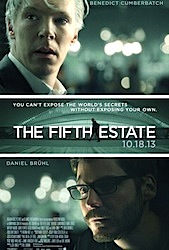
Bill Condon's latest is a real mixed bag. Simultaneously fascinating and apathetic in equal measure, it's careful not to sensationalise the Wikileaks affair too much, but it also stylises events above and beyond your usual docu-drama fayre. It's nice to be able to sit back and watch from a non-judgemental point of view, but there's very little in here that hasn't been all over the news for the past couple of years. It's difficult to reveal the untold truth about the story when that's exactly what Wikileaks have been doing. There are references to the central characters' private lives, but they end up as window-dressing, serving little purpose other than fleshing out the players which the director doesn't want us to get too attached to anyway.
The main problem seems to be, how do you really tell a story which isn't finished yet? Concerns in the press about the lionisation of Julian Assange with this film seem unfounded to me; he's portrayed as neither a hero or villain here, just a flawed, contradicted man whose reach is bordering on exceeding his grasp. Similarly with Assange's protégé/partner, Daniel, while he certainly seems to have a clearer moral compass than Julian, he's essentially just the eyes of the audience, and most of the film is told from his frustratingly-neutral point of view. Benedict Cumberbatch is comfortably eccentric as usual, and Daniel Brühl is quietly fantastic, keeping everything dialled down to everyman-level like a bearded Peter Parker.
The Fifth Estate is an engaging watch, even if it doesn't remain consistently accessible, sort of like a GuardianistaZero Dark Thirty. It's definitely worth a go, but definitely a DVD. The final scene manages to both bolster and patronise the audience; telling them to keep up the good fight for The Truth™, whilst also reminding them that what they've just watched is probably quite far from that exact thing. In many ways it's the perfect analogy for the 21st century.
Well, I suppose.
Yeah, I guess.
I don't actually know.
DVD, tops.
No.
I don't feel the need at the moment.
There isn't.
This will still be miles better than the 'blockbuster thriller' version that will inevitably come out though, won't it?
DISCLAIMERS:
• ^^^ That's dry, British humour, and most likely sarcasm or facetiousness.
• Yen's blog contains harsh language and even harsher notions of propriety. Reader discretion is advised.
• This is a personal blog. The views and opinions expressed here represent my own thoughts (at the time of writing) and not those of the people, institutions or organisations that I may or may not be related with unless stated explicitly.